
If you’re searching for how to lose weight without dieting, you’re in the right place. As a registered dietitian — and someone who has personally broken free from diet culture — I’ve helped countless women reach a healthy weight without calorie obsession, food rules, or restriction.
The truth is, most diets fail in the long run. They leave you frustrated, exhausted, and stuck in the same cycle of losing and gaining weight. But there’s a better way.
In this guide, I’ll show you how to lose weight without dieting by focusing on balanced eating, sustainable habits, and a healthier relationship with food. No forbidden foods, no tracking every bite — just a realistic, science-backed approach that works with your body, not against it.

Why Traditional Diets Often Fail at Long-Term Weight Loss
The Problem With Restrictive Diets and Calorie Obsession
Most diets focus on eating less, cutting calories, and following rigid rules. While this may lead to short-term loss, it rarely lasts. You know the saying, “you always want what you can’t have?” Well, that applies to food, too.
Strict diets often:
- Increase cravings
- Slow metabolism over time
- Lead to overeating later
- Create feelings of failure
When you constantly think about calories and “good” versus “bad” food, eating becomes stressful instead of nourishing. If you’d like to learn more about how to think about food in a neutral way, check out my post, Food Neutrality: Everything You Need to Know.
How Dieting Affects Energy, Sleep, and Mental Health
Restrictive eating doesn’t just affect your weight. It also impacts your overall health. Many people who diet experience:
- Low energy
- Poor sleep
- Increased stress
- Mood changes
- Anxiety around food
Restrictive eating doesn’t just feel miserable — it actually works against you biologically. Research shows that when you restrict calories, your hunger hormones ramp up, your metabolism adapts, and cravings intensify.
It’s not a lack of willpower. It’s your body doing exactly what it’s designed to do. The good news? This guide teaches you how to stop fighting your body and start working with it instead.
The Difference Between Weight Loss and Healthy Weight
Losing weight quickly is not the same as reaching a healthy weight. A healthy weight is maintainable, supported by balanced eating, and linked to good sleep and energy.
A healthy weight is also protective of mental and physical health. Sustainable loss focuses on well-being first, not just the number on the scale.
Can You Really Lose Weight Without Dieting?
What “No Diet” Weight Loss Really Means
Losing weight without dieting does not mean “doing nothing.” It means eating balanced meals, listening to hunger cues, choosing whole foods most of the time, and allowing flexibility. There are no forbidden foods. Instead, you learn how to eat in a way that supports your body.
The Role of Medical and Health Care Guidance
Some people may benefit from support from a health care provider (such as a dietitian) or nutrition clinic, especially if they have hormonal conditions, digestive issues, chronic fatigue, an unhealthy relationship with food, poor body image, or other medical concerns.
Professional guidance ensures your weight loss plan is safe and personalized.
How Time and Consistency Matter More Than Perfection
Healthy loss happens gradually. Small, consistent habits matter more than extreme changes. You don’t need perfection — you need patience. Don’t let that “all or nothing” mindset rule you. If you overeat or stray from your plan, give yourself grace and get back on track.
Build a Sustainable Weight Loss Plan Without Restriction
Focus on Food Quality, Not Just Calories
In my experience as a dietitian, calorie counting is exhausting for most women — and research suggests it can actually contribute to disordered eating patterns for some. Instead, shift your focus to the types of food you’re eating.
Think whole, nourishing foods like lean proteins, healthy fats, and fiber-rich whole grains, fruits, and vegetables — the combination of which naturally regulates your appetite hormones, sustains your energy, and supports your metabolism.
Why Portion Sizes Matter (Without Measuring Everything)
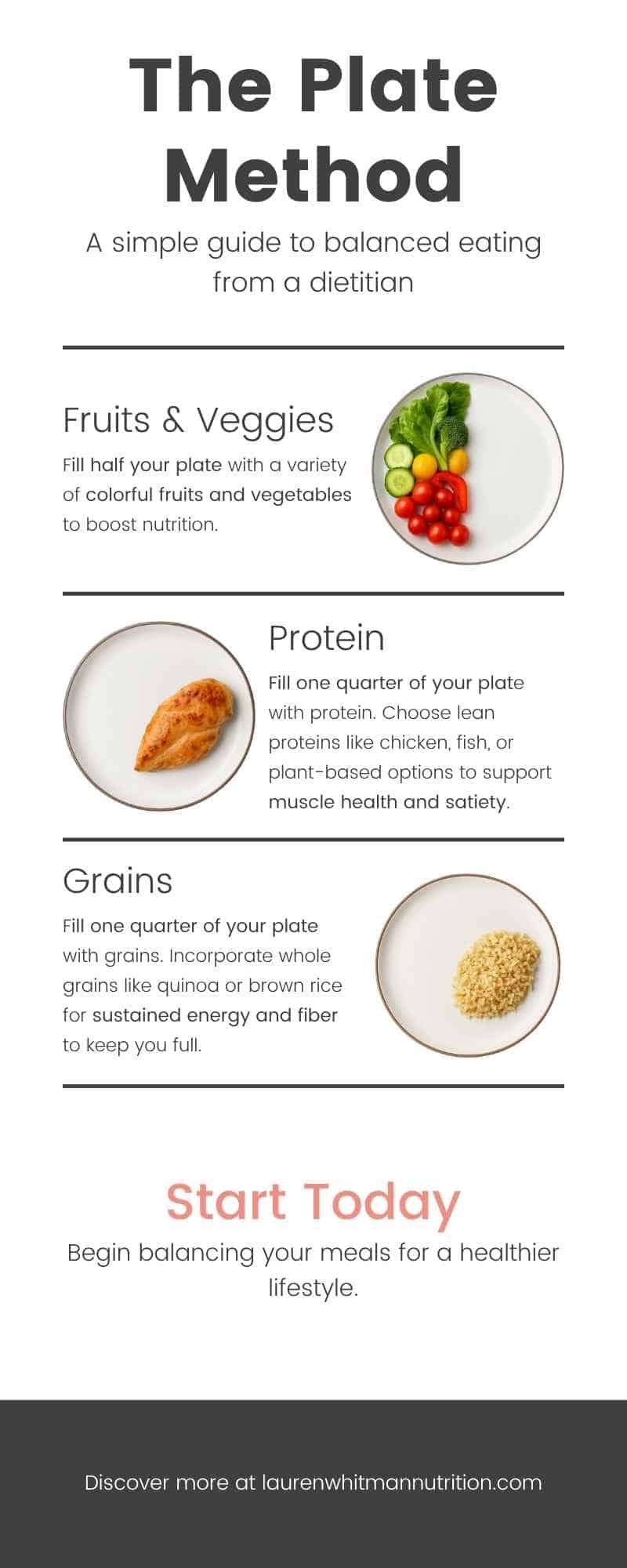
You don’t need a scale or measuring cups to eat well. The plate method is a simple framework that works for most meals:
- Half your plate: fruits and vegetables
- One quarter: protein
- One quarter: whole grains
- Thumb size of healthy fats (if not already included while cooking)
Not every meal needs to look exactly like this. Think of it as a helpful guide for most of the time, not a rigid rule to stress over.
Eat for Weight Loss Using Whole, Nourishing Foods
The Power of Whole Grains and Whole Grain Foods
Whole grains are one of the most underrated tools for sustainable weight management, and unfortunately, one of the first things women cut when they’re trying to lose weight. If you’ve been avoiding carbs, this might be the section that changes your mind.
Unlike refined grains (think white bread and white rice), whole grains retain their bran and germ layers — which is where all the good stuff lives: fiber, B vitamins, iron, magnesium, and antioxidants.
That fiber is particularly important for weight management, because it slows digestion, stabilizes blood sugar, and keeps you feeling genuinely full between meals — not the fake-full that disappears 45 minutes later.
In other words — we have strong evidence that eating more whole grains and fiber-rich foods supports healthy weight, without restriction.
Beyond weight, research consistently links whole grain consumption to lower risk of heart disease, type 2 diabetes, and digestive issues — making them one of the most health-protective foods you can put on your plate regularly.
Great whole grain options include oats, brown rice, quinoa, farro, whole grain bread, whole wheat pasta, and barley. The goal isn’t perfection — even swapping half your refined grains for whole grain versions is a meaningful step in the right direction.
Fill Your Plate With Vegetables and Fruits
Vegetables and fruits are rich in nutrients and low in calories, which make them excellent foods to eat every day. Not only can they help you lose weight, there is also very strong evidence that a diet rich in fruit and vegetables decreases risk of disease.
Fruits and vegetables provide high volume, natural hydration, improved gut health, and reduced cravings. If you’re someone who likes to eat BIG meals — this is your secret to success! Load up on fruits and vegetables!
As a dietitian who has coached a lot of people, I want to stress that the types of fruits and vegetables you eat, and convention or organic, doesn’t matter. As long as you aim for eating about 5 servings (or filling half your plate) of fruits and vegetables a day, you are optimizing your health and weight.
Prioritize Protein for Energy and Fat Loss
If there’s one change that makes the biggest difference for my clients who are trying to lose weight without dieting, it’s this: eat more protein.
Why Protein Keeps You Fuller, Longer
Protein is unique compared to carbohydrates and fat because it keeps you full longer, helps preserve muscle while your body loses fat, and actually requires more energy to digest — meaning your body burns more calories processing it.
Research published in the American Journal of Clinical Nutrition found that protein increases satiety more effectively than carbohydrates or fat, and may naturally reduce how much you eat throughout the day — no calorie counting required.
When I help women lose weight, I often see women who are eating very little protein and genuinely can’t understand why they’re hungry an hour after meals, or why they feel tired and flat despite eating “healthily.” Protein is almost always part of the answer.
How Much Protein Do You Actually Need?
If you’re looking for a starting point on how much protein to eat, the Recommended Dietary Allowance (RDA) suggests at least 0.8 grams of protein per kilogram of body weight per day.
Many dietitians (myself included) recommend eating slightly more protein for women who are active or working on changing their body composition.
If that is you, then it’s safe to aim for 1.2 – 1.5 grams of protein per kilogram of body weight per day. In practical terms, aim for roughly 25–35 grams of protein per meal.
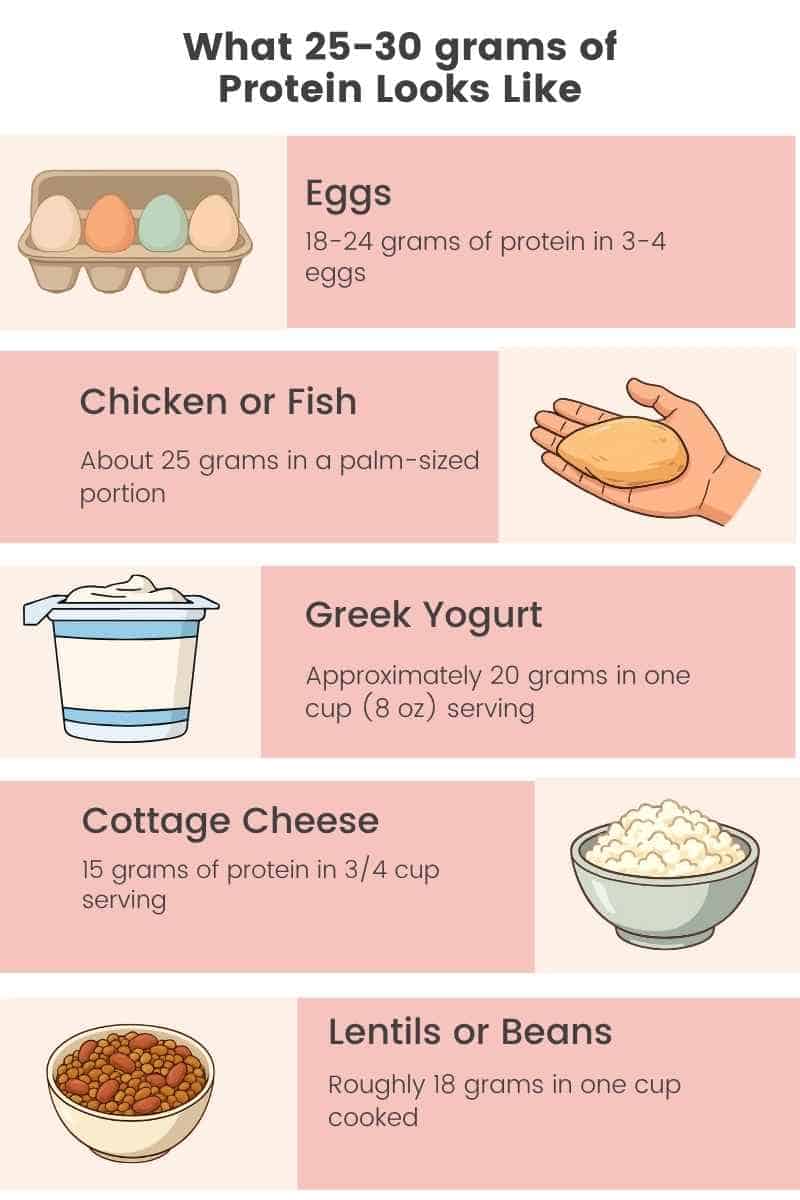
If that sounds abstract, here’s what 25–30g of protein actually looks like on your plate:
- 3–4 eggs
- A palm-sized portion of chicken, fish, or lean beef
- 1 cup of Greek yogurt
- ¾ cup of cottage cheese
- 1 cup of cooked lentils or beans (plus a complementary protein source)
The Simplest Protein Habit You Can Build
The simplest habit? Protein at every single meal. Rather than tracking grams obsessively, just ask yourself before each meal: where’s my protein? That one question, asked consistently, can meaningfully change how satisfied you feel, and how much you naturally eat for the rest of the day.
Good sources to keep on rotation include chicken, salmon, eggs, Greek yogurt, cottage cheese, tofu, edamame, beans, and lentils.
Variety matters here too — different protein sources bring different nutrients, so mixing animal and plant-based options throughout the week is a great habit for overall health.
Choose Healthy Fats and Satisfying Foods
Fat does not make you fat — and if you’ve been avoiding it, this might be the most liberating thing you read today.
Healthy fats from foods like avocado, nuts, seeds, and olive oil are essential for hormone health, vitamin absorption, and genuine meal satisfaction.
In my practice, women who reintroduce healthy fats often report feeling fuller, more energized, and — surprisingly — less obsessed with food throughout the day.
A balanced meal combining protein, fiber, and healthy fat is almost always more effective for appetite control than any low-fat alternative.
Drink Water and Support Your Body’s Natural Fat Loss
How Hydration Affects Appetite and Energy
Many people confuse thirst with hunger. Drinking enough water supports digestion, reduces unnecessary snacking, improves energy, and helps regulate appetite. Aim to drink regularly throughout the day.
If you were looking for a sign to buy a cute, new water bottle, this is it. I finally bought this 30 oz Stanley and filling it just three times a day helps me reach the 91 oz recommendation for women per day! (Please note I may make a small commission if you make a purchase through this link.)
Smart Beverage Choices for Weight Management
One of the most impactful — and overlooked — changes you can make when trying to lose weight without dieting is taking a hard look at what you’re drinking.
Sugar-sweetened beverages like soda, juice, sweetened coffee drinks, alcohol, and energy drinks are one of the leading sources of excess calories in the American diet, yet they do virtually nothing to make you feel full or satisfied.
In my practice, I’ve seen women lose weight without changing a single thing about their food — just by swapping out their daily sugary drinks for water, sparkling water, or unsweetened coffee and tea.
It sounds almost too simple, but liquid calories are easy to overconsume because they don’t trigger the same fullness cues that solid food does.
This doesn’t mean you can never enjoy a glass of wine or your favorite latte — it just means being intentional about where your calories are coming from, and making water your default.
Improve Sleep, Stress, and Daily Habits for Better Results
How Sleep Impacts Weight and Hormones
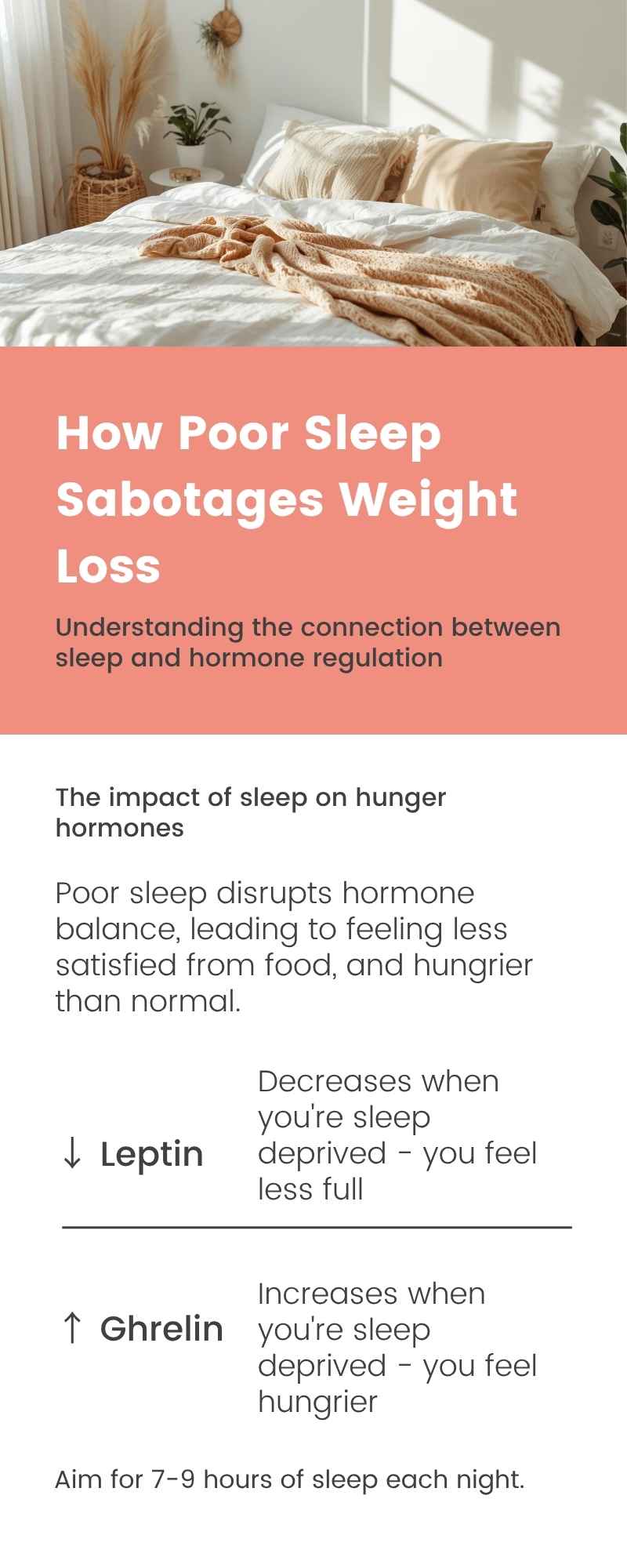
Poor sleep affects hunger hormones and fat storage. If you’ve been doing everything ‘right’ with food and exercise but still struggling to see results, your sleep could be the missing piece.
Research shows that consistently sleeping too little raises your risk of belly fat, high blood pressure, high blood sugar, and poor cholesterol — making quality sleep one of the most powerful (and underused) tools for women’s health and weight management.
To summarize, when you’re tired, your appetite increases, cravings rise, and motivation drops. Aim for 7–9 hours of sleep each night.
Managing Stress Without Turning to Food
If you’ve ever found yourself reaching for chips, chocolate, or a second glass of wine after a hard day — you’re not weak or undisciplined. You’re human. And there’s actually a biological reason this happens.
When you’re under chronic stress, your body produces a hormone called cortisol.
Research shows that cortisol causes redistribution of fat to the abdominal region and increases appetite with a preference for energy-dense comfort foods — and chronic stress is linked to increased cravings specifically for high-fat, energy-dense foods.
This is not a willpower problem. It’s biology.
In my practice, stress is one of the most underestimated barriers to weight loss I see. A woman can be doing everything right — eating well, moving her body, sleeping enough — and still struggling because her nervous system is chronically in overdrive.
The good news is that managing stress is a learnable skill. Strategies that work include deep breathing, walking outside, journaling, talking to a friend or therapist, and setting better boundaries.
The goal isn’t to eliminate stress — that’s not realistic. The goal is to build a toolkit of responses so that food isn’t your only one.
Daily Movement That Supports Healthy Weight Loss
Movement doesn’t have to mean grueling workouts or hours at the gym. Were you one of those High Intensity Interval Training (HIIT) workout girlies who ruined your relationship with exercise, or is that just me?
Fortunately I’ve healed my relationship with exercise, and I’ve helped a lot of other women do the same.
For one, I’ve stopped calling it ‘exercise’ altogether — I prefer ‘movement’ now. It quietly removes the pressure and expectations that come with formal workouts. And honestly? The best type of movement is simply the one you’ll actually do.
How Much Movement Do You Actually Need?
Both The American Heart Association and the Department of Health & Human Services recommend 150 minutes of movement per week and strength training at least twice a week — which sounds like a lot, but broken down, that’s just 30 minutes, 5 days a week.
Whether that’s a morning walk, a dance class, lifting weights, or yoga during your lunch break (or after the kids are in bed), all of it counts.
Are You Hitting Your Weekly Movement Goals?
Ask yourself honestly: are you getting at least 150 minutes of movement per week most weeks?
If you’re not quite there yet, even small increases in daily movement can have a meaningful impact on your energy levels, mood, and how you feel in your body — and that’s a great place to start.
Already hitting 150 minutes of movement a week? That’s something to be SO proud of! If you ever feel ready to build toward 300 minutes, the U.S. Department of Health and Human Services’ Physical Activity Guidelines note that additional health benefits increase significantly.
But the bottom line on movement? 150 minutes done consistently – that’s a huge win.
Regular movement is one of the most powerful things you can do for your body — and unlike restrictive dieting, the side effects are almost entirely positive: better energy, improved sleep, a stronger body, and yes, often a healthy weight over time.
How to Eat Mindfully and Rebuild Your Relationship With Food
Listen to Hunger and Fullness Signals
Your body gives natural cues. Practice eating when hungry, stopping when satisfied, slowing down, and removing distractions. This helps prevent overeating without rules.
Break the Cycle of Emotional and Stress Eating
Identify triggers such as fatigue, boredom, loneliness, and overwhelm. Create a toolbox of supportive responses instead of relying on food alone. If you are unsure of where your relationship stands with food, take my quick Food Freedom Quiz here.
Enjoy Eating Without Guilt or Restriction
Food is not a moral issue. You aren’t a better person if you eat kale. And you aren’t a bad person for enjoying dessert. When you allow all foods in moderation, cravings often decrease. Satisfaction increases, and balance becomes easier.
Sample Weight Loss Plan Without Dieting
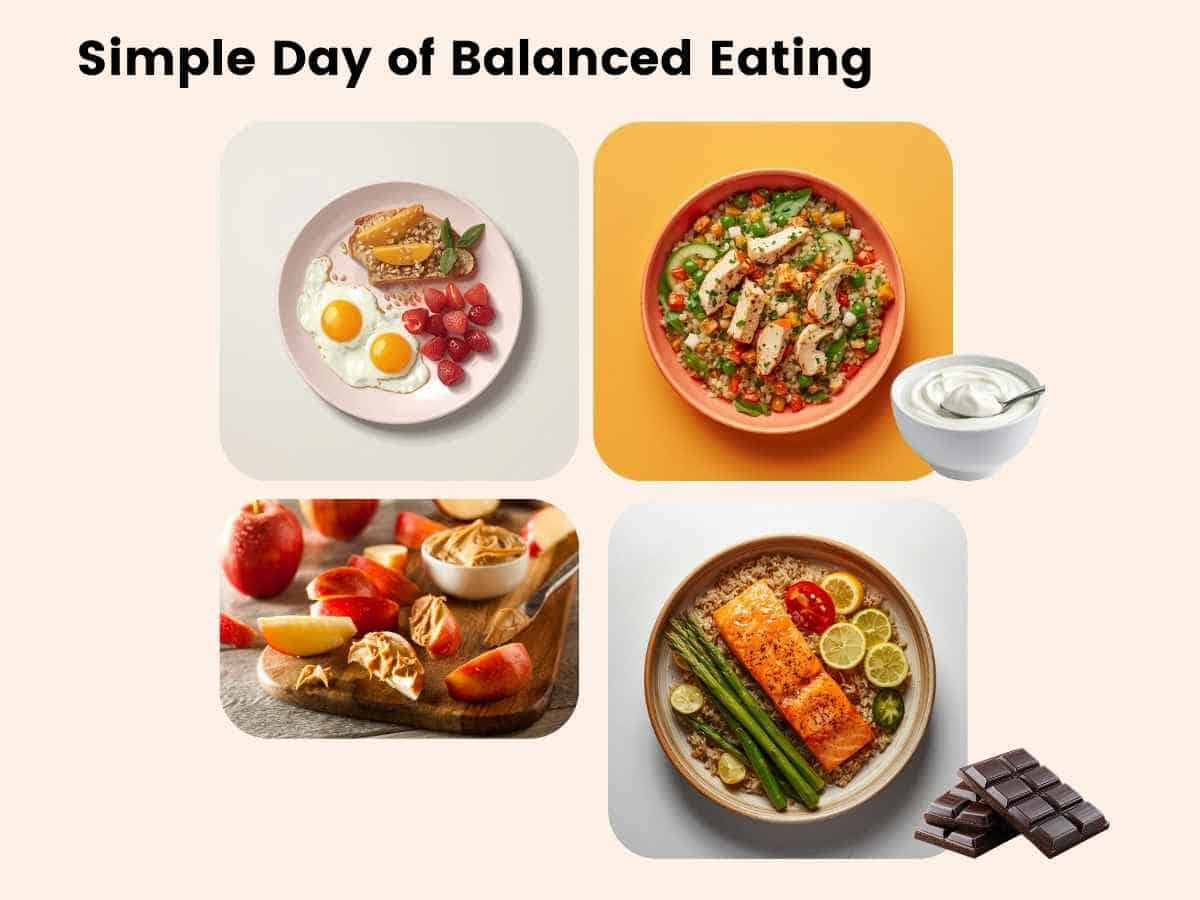
A Simple Day of Balanced Eating
Breakfast
- Eggs with vegetables and whole grain toast
- Fruit on the side
Lunch
- Quinoa salad with chicken, vegetables, olive oil
- Yogurt
Snack
- Apple with peanut butter
Dinner
- Salmon, roasted vegetables, brown rice
Dessert (Optional)
- Dark chocolate or your favorite treat
Weekly Habits for Sustainable Loss
- Grocery shop with a plan
- Prep simple meals
- Schedule movement
- Prioritize sleep
- Drink water regularly
When to Seek Medical or Clinical Support
Signs You May Need Professional Help
Consider support if you experience:
- Chronic fatigue
- Digestive problems
- Irregular cycles
- Disordered eating patterns
- Plateau despite healthy habits
Why Evidence-Based Support Matters
Avoid extreme or unproven methods. Science-based guidance protects your health and improves long-term results. A qualified professional can review your medical history, create a personalized plan, monitor progress, and provide accountability.
Common Myths About Losing Weight Without Dieting
“You Must Cut Out Carbs”
Carbohydrates, especially whole grains, provide essential energy. Cutting them entirely is unnecessary and often counterproductive.
“You Have to Eat Less to Lose”
Eating too little slows metabolism. Balanced eating supports better, more sustainable loss.
“Healthy Food Is Boring”
With proper seasoning and variety, healthy foods can be enjoyable and deeply satisfying.
Frequently Asked Questions About Losing Weight Without Dieting
Can you really lose weight without dieting?
Yes — and for many people, ditching the diet is actually what makes weight loss stick. When you stop restricting food and start focusing on balanced, nourishing meals, your body responds better over time.
Rather than fighting cravings and low energy, you work with your hunger cues, build sustainable habits, and reach a healthy weight without the cycle of restriction and rebound.
How long does it take to lose weight without dieting?
It varies from person to person, but sustainable weight loss typically happens at a rate of 0.5–1 lb per week. This may feel slower than crash diets promise, but the results last.
Most people begin noticing positive changes in energy, sleep, and appetite within the first 2–4 weeks — even before the scale moves significantly.
What should I eat to lose weight without counting calories?
Focus on filling your plate with whole foods: lean protein, vegetables, fruits, whole grains, and healthy fats. Using the plate method — half vegetables and fruit, one quarter protein, one quarter whole grains — is a simple way to eat balanced portions naturally, without tracking every bite.
Is it possible to lose weight just by eating healthier?
For many people, yes. Improving food quality — eating more whole foods, less processed food, and fewer sugary drinks — can lead to natural weight loss without any formal “diet.”
Pairing healthier eating with better sleep, stress management, and regular movement makes the results even more sustainable.
Why do I keep gaining weight even when I diet?
Restrictive dieting often backfires because it slows your metabolism, increases cravings, and triggers overeating once the rules are lifted. This is sometimes called “yo-yo dieting.” A non-diet approach focuses on long-term habits rather than short-term restriction, which breaks this cycle for good.
When should I see a dietitian for weight loss?
Consider working with a registered dietitian if you have a medical condition affecting your weight, a history of disordered eating, or if you’ve tried multiple approaches without lasting results.
A dietitian can create a personalized plan that’s safe, evidence-based, and tailored to your specific health needs.
Final Thoughts: Lose Weight by Supporting Your Health First
You don’t need perfect eating to succeed. Small steps add up over time. Sustainable habits — balanced meals, regular movement, adequate sleep, and stress management — protect both physical and mental health.
Weight loss without dieting is about partnership with your body — not punishment. When you prioritize nourishment, energy, and well-being, healthy loss often follows naturally. Your body deserves respect and care.
If you’re interested in reading more about how to respect and care for your body, check out my article, Top 20 Body Neutral Affirmations.